 Email:
lisa@gelgoog.com
Email:
lisa@gelgoog.com Phone:
0086-155-1557-1373
Phone:
0086-155-1557-1373


 Language



Hard Biscuit VS Soft Biscuit Production Difference
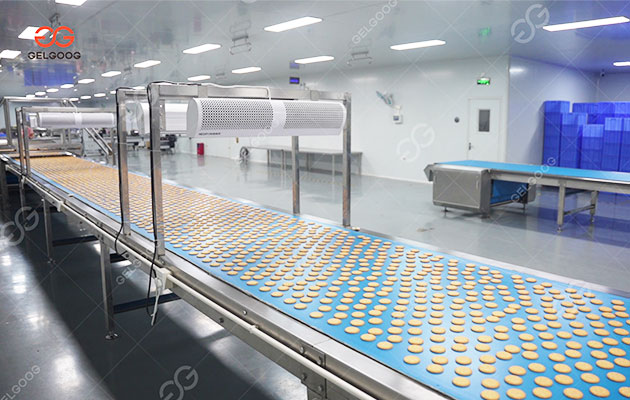
In industrialized biscuit production, hard biscuits and soft biscuits are two common product types with different manufacturing processes. This article mainly explores the core differences between hard biscuit vs soft biscuit production. This not only helps with product positioning but also directly impacts recipe design, production processes, and the equipment used.
Different Recipe Structures
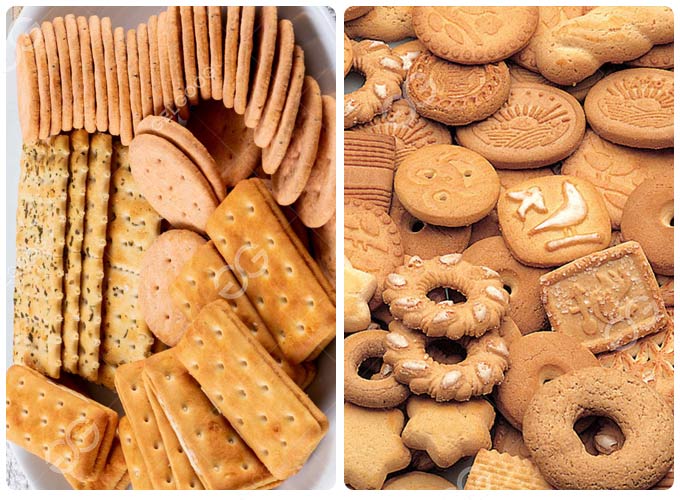
Hard biscuits typically have a lower moisture content, and their recipes are mainly composed of flour, fat, and sugar. The biscuit dough is firmer, emphasizing extensibility and shape stability. These hard biscuits prioritize a crisp texture and a longer shelf life.
In contrast, soft biscuit recipes have a higher proportion of fat, sugar, and moisture. The dough is softer and more aerated. The finished product has a soft or slightly chewy texture, requiring more precise control over oven temperature and baking stages.
Hard Biscuit VS Soft Biscuit Production Process Differences
- In hard biscuit production, the dough is smooth and relatively elastic.
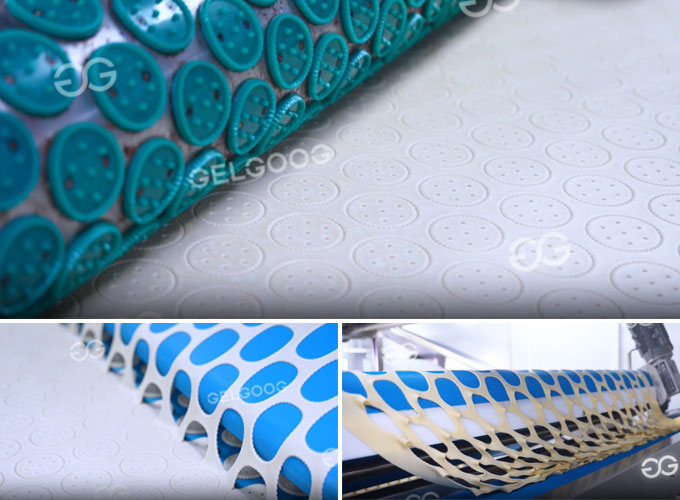
- It typically requires a rolling process, forming a uniform sheet through multiple rollers.
- Shaping uses roll cutting, where patterned rollers with die patterns rotate against each other, applying pressure to the sheet to imprint and cut the pattern.
- Hard biscuits have a high moisture content, and the dough doesn't evaporate moisture easily. Before baking, they need to be shaped and then expand, requiring low-temperature, long baking times. Otherwise, hard biscuits are prone to bubbling, so a longer oven is generally required.
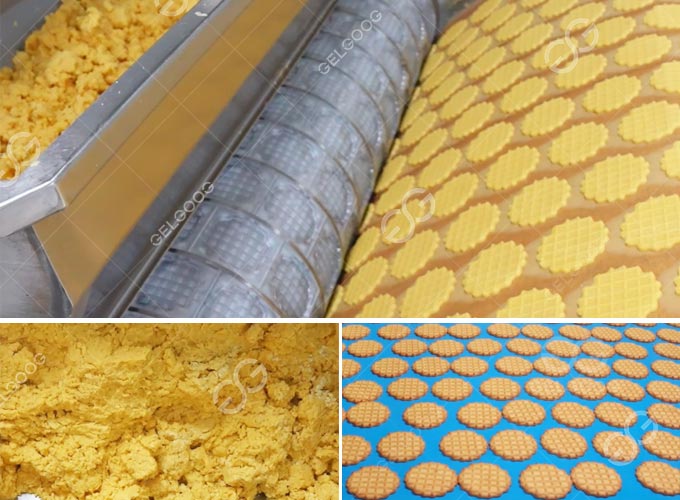
- In soft biscuit production, the shaped dough is fibrous and cannot be formed into a smooth dough.
- Soft biscuits do not require rolling; they are typically shaped using roll forming, extrusion, wire cutting, etc. The dough flakes are extruded into the mold.
- Soft biscuits have a low moisture content, so they have lower requirements for the oven. They are baked at high temperatures from the start and for a short time. There is no issue with bubbling, so the oven length can be appropriately shorter.
As we can see from the above process, hard and soft biscuits differ in their shaping methods. Aside from this, the equipment used is essentially the same. With increasing market demand for diverse biscuit types, more and more manufacturers are starting to produce both types of biscuits to improve equipment utilization and respond quickly to market changes.
Based on changing market demands, GELGOOOG, as a biscuit production line manufacturer, is constantly optimizing its production solutions. Through modular design, the same biscuit production line can accommodate both hard and soft biscuit production needs after adjusting the forming structure and process parameters.
This multi-purpose design provides manufacturers with greater flexibility in product switching and investment planning. If you would like to learn more about biscuit processing machine, please feel free to contact us.