 Email:
lisa@gelgoog.com
Email:
lisa@gelgoog.com Phone:
0086-155-1557-1373
Phone:
0086-155-1557-1373


 Language



How Profitable is Biscuit Business in Nigeria
How profitable is biscuit business in Nigeria requires a comprehensive examination of various factors, including market demand, consumer structure, production costs, and equipment configuration.
The Nigerian biscuit market has long been active with a broad consumer base, but the profitability varies significantly among biscuit companies of different sizes and market positioning.
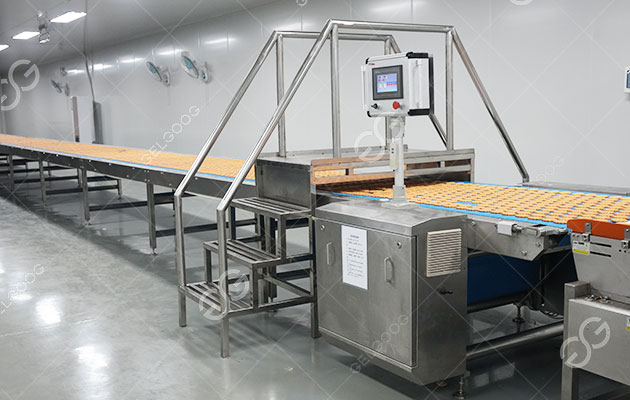
Only with a thorough understanding of the local market environment and production conditions can one objectively determine whether the biscuit business in Nigeria has stable profitability.
I. The Foundation of the Nigerian Biscuit Market
From a consumption perspective, biscuits in Nigeria are not only a snack but also a common everyday food. They are widely consumed in homes, schools, offices, and street retail settings. Due to their relatively long shelf life and low transportation and storage requirements, biscuits are well-suited for large-scale production and nationwide distribution.
The market currently features both established local biscuit companies and continuously entering import brands, indicating a stable and sustained market demand for biscuits in Nigeria. This is one of the core reasons why the question how profitable is biscuit business in Nigeria is frequently discussed.

II. Profitability of the Biscuit Business: Efficiency is Important
In the Nigerian market, biscuit profits do not primarily come from high unit prices, but rather from large-scale production, unit cost control, and consistent output. This makes the configuration of production equipment a crucial factor in determining profitability.
For example, using Automatic Biscuit Production Line allows for continuous operation from raw material mixing, forming, baking, to cooling, significantly reducing reliance on manual labor.
Simultaneously, using Dough Mixer for Biscuits, Biscuit Rotary Moulder, and Tunnel Oven for Biscuit Baking helps improve biscuit product consistency, reduce defect rates, and thus improve the overall gross profit margin.
In the context of fluctuating labor and energy costs in Nigeria, equipment efficiency is often more important than simply lowering raw material costs.

III. Investment Costs and Challenges
To invest in the biscuit business in Nigeria, we must address the following issues:
- Fluctuating raw material prices: The prices of flour, sugar, and oil are significantly affected by exchange rates and import factors.
- Inflationary pressure: Consumers are price-sensitive, and excessively high pricing can easily affect sales.
- Intense market competition: Established brands have already built channels and brand recognition, and new entrants need time to gain market share.
In this environment, simply relying on low-price competition is unsustainable. Instead, maintaining profit margins in the long term requires stable equipment operation, reasonable production line configuration, and product specifications adapted to the local market.
IV. Enhancing Long-Term Profitability Through Equipment Planning
Based on many successful cases, Nigerian biscuit factories focus on the following aspects:
- Does the production line support multiple biscuit specifications (sweet biscuits, hard biscuits, sandwich biscuits, etc.)?
- Is the equipment easy to expand or upgrade in the future?
- Are energy consumption and maintenance costs controllable?
For investors planning to enter this market, the question of how profitable is biscuit business in Nigeria requires a comprehensive assessment considering several key factors. This will ensure a more stable and sustainable return on investment in the Nigerian biscuit market, making investment decisions more rational and controllable.